Is vegetarian food automatically halal? Hidden risks
The menu says vegetarian, and you are not sure whether that settles the question.
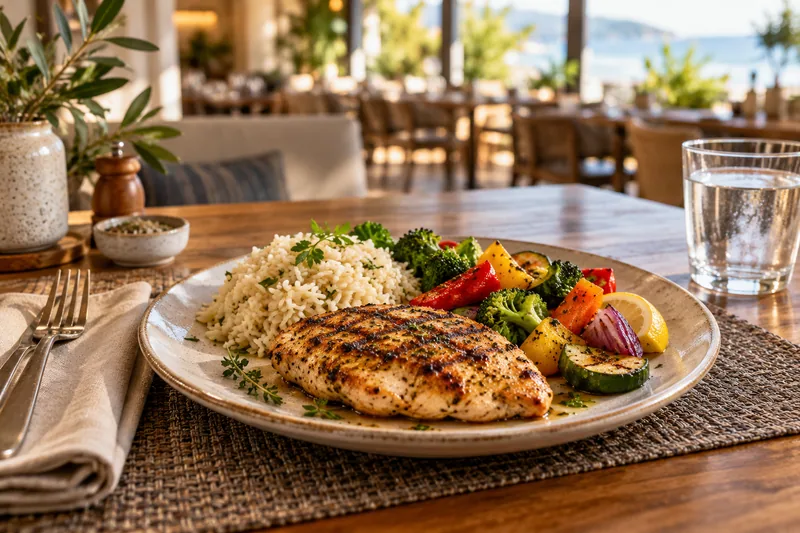
No, vegetarian food is not automatically halal. It removes meat and fish, which is the biggest risk, but alcohol, gelatine, rennet and shared pans can all sit inside a meat-free menu. Use vegetarian as a safer default, then ask a few short questions.
Which traveller does this matter for?
- You eat only certified food: vegetarian is not a substitute for a certificate.
- You avoid pork and alcohol but are flexible otherwise: vegetarian can work if you check sauces and desserts.
- You are on a budget: vegetarian is the easiest fallback, so these checks pay off every day.
Where you draw your line is your decision. For a fiqh question, ask your ustaz or the state mufti office.
Where do the hidden risks sit?
| Ingredient | Where it shows up | What to ask |
|---|---|---|
| Alcohol in sauces | Stir-fry sauces, marinades, glazes, dressings | “Is wine, mirin or sake used?” |
| Gelatine | Desserts, jellies, yoghurts, marshmallows | “What sets this dessert?” |
| Rennet | Cheese in pasta, pizza, baked dishes | “Is the cheese made with animal rennet?” |
| Animal stock | Soups, rice dishes, sauces | “Is the stock made from vegetables only?” |
| Shared pan or fryer | Fried snacks, noodles | “Is it cooked in oil used for meat?” |
How does alcohol hide in a vegetarian dish?
Cooking wine, mirin, sake and beer batter all appear in meat-free dishes. Japan’s tourism board warns that cooking sake and mirin are widely used in Japanese dishes, and that some miso contains alcohol unless labelled additive-free1. Our lard, mirin, cooking wine and gelatine guide lists more places to look, and vegetarian food in Japan goes deeper on dashi.
What about gelatine and rennet?
Gelatine is made from animal parts and gives desserts their set. Rennet curdles milk for cheese, and traditional rennet is animal-derived. Neither shows on a menu. The guide on gelatine and additives in packaged snacks helps with shop-bought items.
Is a Buddhist or pure vegetarian restaurant enough?
It is a good sign for meat and fish. It does not settle alcohol, gelatine or shared utensils, and a religious vegetarian kitchen follows rules of its own. Read Buddhist vegetarian restaurants in Taiwan for an example, and the guide on vegetarian India versus halal for another view.
What should you ask at the counter?
Copy these three questions.
- “Is wine, mirin, sake or beer used in any sauce?”
- “Is there gelatine in the dessert or the yoghurt?”
- “Is the pan, grill or fryer also used for meat?”
If the answers are vague, record the venue as unknown. Unknown is never the same as halal.
Your next step
Write a one-line rule for vegetarian meals, for example “no alcohol, no gelatine, no shared fryer”, and use vegetarian or halal-certified to decide meal by meal. For more checks, browse the halal food hub.
Tell us the country and the type of vegetarian meal you are considering and we will help you shape the three questions to ask.
Common questions
Is vegetarian food automatically halal?
No. Vegetarian means no meat or fish, which removes the biggest risk. It does not remove alcohol in sauces, gelatine in desserts, rennet in cheese, or a pan shared with meat. Treat vegetarian as a safer default, then ask a few short questions.
Where does gelatine hide in a vegetarian menu?
It can appear in desserts, jellies, yoghurts, mousse, marshmallows and some sweets. Gelatine is made from animal parts, and the source animal is not stated. If a dessert is wobbly or set, ask what sets it before you order it.
What is rennet and why does it matter?
Rennet is an enzyme used to set cheese, and traditional rennet comes from the stomach of young animals. A vegetarian-looking cheese dish may therefore contain animal-derived rennet. Ask whether the cheese is made with microbial or plant-based rennet, or avoid cheese dishes.
Can I trust a vegetarian restaurant that calls itself pure vegetarian?
It is a good sign for meat, and you still need to ask about alcohol in sauces, gelatine and shared utensils. A religious vegetarian kitchen follows its own rules, which are not halal rules. The label tells you about animal products, not about your halal rule.
What is the quickest check at a vegetarian counter?
Ask three things: is there alcohol, wine or mirin in the sauces, is there gelatine in the dessert, and is the pan or fryer shared with meat? Three short questions cover the usual gaps and are easy to ask at the counter, even through a translation app.
Sources
- JNTO warns that cooking sake and mirin are used in many Japanese dishes, and some miso contains alcohol unless labelled additive-free (mu-ten-ka). JNTO (japan.travel), Muslim travelers
Keep planning
Tell us the country and the type of vegetarian meal you are considering and we will help you shape the three questions to ask.