Halal, Muslim-owned, pork-free: what each claim means
You see a sign that says halal, and you are not sure what it is actually saying.
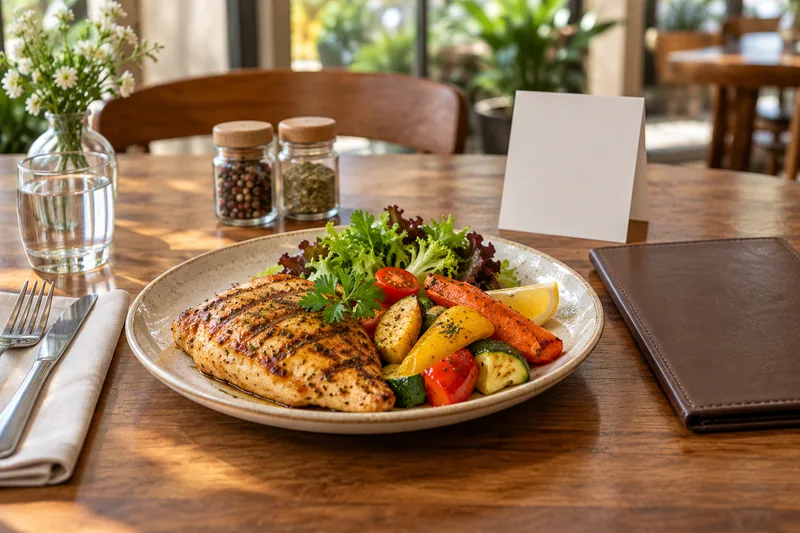
The word “halal” on a sign can describe five different situations, plus a sixth where nobody knows. Each one gives you a different amount of proof. Once you can tell them apart, you can decide calmly, by your own standard, instead of guessing at the door.
Which claim fits which traveller?
- You eat only certified food: look for a certificate you can see, and treat every other state as unconfirmed.
- You accept Muslim-owned venues: ask a few more questions about the kitchen and suppliers.
- You are pork-free and alcohol-free but flexible on the rest: pork-free seafood and vegetarian meals may work, with careful sauce questions.
- Your family differs: agree one shared rule before the trip, so nobody argues in front of a menu.
Each household draws the line in its own place. This guide does not rule on where yours should be. For a fiqh question, ask your own ustaz or your state mufti office.
The six claim states side by side
| State | Who says it | Proof you can see | Still unchecked |
|---|---|---|---|
| Certified halal | A recognised halal body | A valid certificate | Whether it covers this branch and kitchen |
| Operator-declared halal | The restaurant or operator | Nothing, or a sign | Everything, including suppliers |
| Muslim-owned | The owner’s identity | A name, or a story | Kitchen, ingredients, alcohol |
| Muslim-friendly | The venue or a tourism body | A prayer room or a halal dish | Whether the rest of the kitchen is halal |
| Pork-free | The menu | No pork listed | Lard, alcohol, shared tools |
| Unknown | Nobody | Nothing | All of it |
Why does one word change from country to country?
Different countries use the same labels differently. The Korea Tourism Organization (KTO) sorts Muslim-friendly restaurants into four categories.
- Halal Certified: an accredited agency such as the Korea Muslim Federation has certified the restaurant1.
- Self-Certified: the Muslim owners certify the restaurant themselves2.
- Muslim Friendly: some halal dishes are provided and alcohol may be sold3.
- Pork-free: the restaurant has no halal menu but does not use pork4.
So “self-certified” in Seoul is our “operator-declared”. The tourism body is being clear. You still need to read the category, not just the badge.
KTO also warns that hotel restaurants and buffets categorised as Muslim-friendly may serve dishes that contain pork5.
What does each state mean for you?
Certified halal. Look at the certificate: who issued it, the expiry date, and whether it names this branch. JAKIM appoints foreign bodies for three years, then audits them again8, so ask whether the issuer is on JAKIM’s current list. Our guide to Asian bodies JAKIM recognises explains how to look it up.
Operator-declared and Muslim-owned. These rely on the word of the people running the place. They can be sincere and careful.
The point is that you have not seen independent evidence, so ask about suppliers. The guide on Muslim-owned versus halal-certified goes deeper.
Muslim-friendly. Read it as “some needs considered”. It is not a halal certification. See halal-certified versus Muslim-friendly.
Pork-free. In Japan, JNTO warns about cooking sake and mirin, and about miso that contains alcohol unless it is labelled additive-free9. A pork-free menu tells you nothing about those.
Unknown. Ask, or choose a safer fallback.
Watch out for look-alike logos
In Malaysia, only JAKIM, MAIN or JAIN can issue the Malaysian Halal Certification and permit the official halal logo6. JAKIM says logos issued by anyone else are invalid, and that “Muslim Choice” is not a recognised halal label7.
Abroad the same caution applies: a logo is only as good as the body behind it. Reading halal logos and certificate photos shows what is missing when a photo looks suspicious.
What to ask before you sit down
Copy these and send them by message, or show them on your phone.
- “Do you have a halal certificate? Which body issued it, and when does it expire?”
- “Does the certificate cover this branch and this kitchen?”
- “Is there pork, lard, alcohol, mirin or cooking wine in any dish or sauce?”
- “Are the meat and the sauces bought from certified suppliers?”
- “Is the grill, oil and equipment shared with pork dishes?”
If the answer is vague, treat the venue as unknown. If the certificate looks old, see what to do about an expired halal certificate.
Your next step
Write your own rule in one line, for example “certificate only” or “Muslim-owned or certified, no alcohol”. Then use the meal-assurance comparison tool to compare tour and hotel offers by that rule. For the full set of food checks, see our halal food hub.
If your family does not agree on where the line sits, send us the names of the people travelling and we will help you draft one shared meal rule before you book.
Common questions
Is Muslim-owned the same as halal?
No. Muslim-owned tells you who runs the business, not how the kitchen works or where the ingredients come from. A Muslim-owned place may well serve halal food, but the claim stands on the owner's word unless you also see a certificate. Ask the same questions you would ask anywhere.
What does pork-free mean for my meal?
It means pork is not on the menu. It does not tell you whether the same grill, oil or utensils touch pork elsewhere, or whether sauces contain lard or alcohol. For some travellers that is enough, for others it is not. Decide beforehand where your own line sits.
Does a halal logo on the door prove the food is halal?
Only if you know who issued it. A logo from an unfamiliar body proves little, because anyone can print one. Photograph it, note the issuer and expiry date, and compare the issuer with JAKIM's list of recognised foreign bodies.
How do I treat a restaurant that has no sign at all?
Treat it as unknown, which is never the same as halal. Unknown is not a bad restaurant, only one where nobody has shown evidence. Your options are to ask, to choose seafood or vegetarian dishes with questions about sauces, or to eat somewhere that already has a certificate you can see.
Who decides what is acceptable for our family?
You do, with your own ustaz or your state mufti office if you want a ruling. This guide only explains what each claim says and what it leaves out. Family members can differ, so agree your line before the trip, and then choose each meal by that agreed line.
Sources
- Korea Tourism Organization's four Muslim-friendly restaurant categories include Halal Certified: the restaurant is certified by an accredited halal certification agency such as the Korea Muslim Federation (KMF). Korea Tourism Organization (VisitKorea), Muslim-friendly Travel
- Korea Tourism Organization's four Muslim-friendly restaurant categories include Self-Certified: the restaurant is certified as halal by its Muslim owners themselves and all food is halal. Korea Tourism Organization (VisitKorea), Muslim-friendly Travel
- Korea Tourism Organization's four Muslim-friendly restaurant categories include Muslim Friendly: some halal dishes are provided and alcohol may be sold. Korea Tourism Organization (VisitKorea), Muslim-friendly Travel
- Korea Tourism Organization's four Muslim-friendly restaurant categories include Pork-free: the restaurant has no halal menu but does not use pork, and alcohol may be sold. Korea Tourism Organization (VisitKorea), Muslim-friendly Travel
- KTO warns that hotel restaurants and buffets categorised as 'Muslim-friendly' may serve dishes that contain pork. Korea Tourism Organization (VisitKorea), Muslim-friendly Travel
- Under the Trade Descriptions (Certification and Marking of Halal) Order 2011, only JAKIM, MAIN or JAIN can issue the Malaysian Halal Certification (SPHM) and permit use of the official Malaysian halal logo. New Straits Times (Nov 2025)
- JAKIM says logos or terms implying halal status issued by anyone other than JAKIM or MAIN/JAIN are invalid, and that 'Muslim Choice' is not a recognised halal label. New Straits Times (Nov 2025)
- JAKIM states a foreign halal certification body's appointment is valid for three years, after which JAKIM carries out a review audit. JAKIM, Recognized Foreign Halal Certification Bodies & Authorities (effective 21 August 2026)
- JNTO warns that cooking sake and mirin are used in many Japanese dishes, and some miso contains alcohol unless labelled additive-free (mu-ten-ka). JNTO (japan.travel), Muslim travelers
Keep planning
If your family does not agree on where the line sits, send us the names of the people travelling and we will help you draft one shared meal rule before you book.