Pork-free versus halal: what changes on your plate
The sign says no pork, and you are wondering whether that is enough for your family.
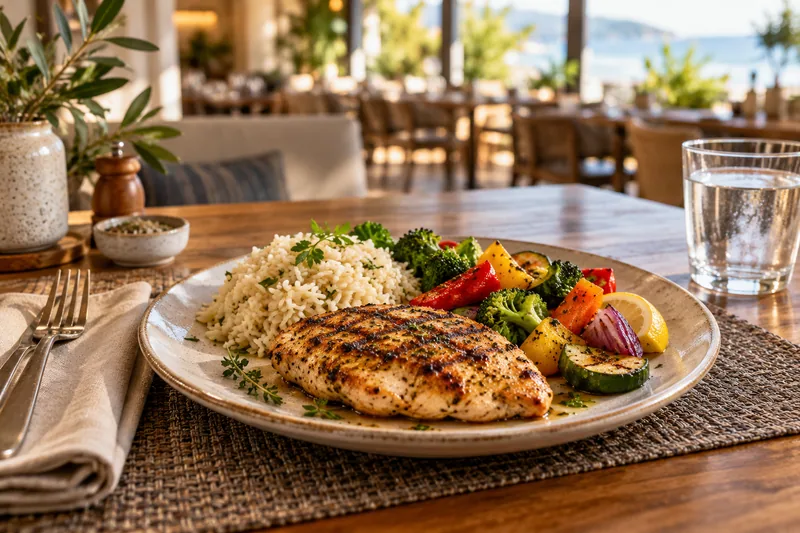
Pork-free means pork is not served. Halal means a whole set of requirements about meat, ingredients, alcohol and equipment. When a kitchen is pork-free but not certified, three risks stay open: alcohol, stock and shared equipment. This page shows each one and the question that exposes it.
Which description fits your travel style?
- Certified only: pork-free does not meet your rule. Look for a certificate you can see.
- No pork, no alcohol, flexible on the rest: pork-free can work if you check sauces and stock.
- Mixed-observance family: agree one shared rule before the trip, then apply it at each meal.
Where your line sits is your decision. For a fiqh question, ask your own ustaz or the state mufti office.
How do pork-free and halal compare?
| Basis | Pork-free | Halal-certified |
|---|---|---|
| What it promises | Pork is not on the menu | A recognised body has checked the process |
| Proof you can see | A menu, a sign | A valid certificate |
| Meat source | Unchecked | Covered by the certificate |
| Alcohol in cooking | Unchecked | Covered by the certificate |
| Shared equipment | Unchecked | Covered by the certificate |
Korea’s tourism organisation draws the same line in an official category. Its Pork-free tier is for a restaurant that has no halal menu but does not use pork, and alcohol may be sold1.
What risks remain in a pork-free kitchen?
Alcohol. Cooking wine, mirin, sake and beer can sit in sauces, marinades and glazes. Japan’s tourism board warns that cooking sake and mirin are widely used in Japanese dishes, and that some miso contains alcohol unless labelled additive-free2. Our guide to lard, mirin, cooking wine and gelatine covers the full list.
Stock. A soup or noodle broth can start from bones you cannot see. Ask what the stock is made from, not only what is in the bowl.
Shared equipment. The grill, wok and fryer may be shared with pork elsewhere on the menu. The same tourism board notes that a restaurant calling itself halal-friendly may not have a separate halal-only kitchen3.
What should you ask?
Copy these questions and show them on your phone.
- “Is there pork, lard or pork stock in any dish or sauce?”
- “Is alcohol, wine, mirin or sake used in cooking?”
- “Is the grill, wok or fryer shared with pork?”
- “Is the meat from a supplier with a halal certificate?”
If the answers come back vague, record the venue as unknown. Unknown is never the same as halal. For a country example, see pork-free versus halal in Vietnam.
When is pork-free an acceptable fallback?
Only you can say. Some travellers keep it as a plan B for the days when no certified option exists. If you do the same, add a rule for sauces and oil, and use vegetarian or halal-certified to choose meal by meal. A hotel kitchen has its own risks, which the guide on alcohol in a hotel restaurant explains.
Your next step
Write your rule in one line, such as “certificate, or pork-free with no alcohol in cooking”. Then line up your offers in the meal-assurance comparison tool, and read the five halal claim states for the full set of labels. For more checks, visit our halal food hub.
If your family disagrees about pork-free, send us who is travelling and we will help you draft one shared meal rule.
Common questions
Is a pork-free restaurant halal?
No. Pork-free means pork is not on the menu. It does not tell you what the stock contains, whether alcohol is used in cooking, or whether meat comes from a source you accept. Treat it as one claim state among six, and ask the follow-up questions.
Is pork-free good enough when I am travelling?
That is your decision. Some travellers accept pork-free seafood and vegetarian meals when no certified option exists. Others accept only certified food. Write your own rule before the trip so each meal is decided calmly, not at the table.
What is the most common hidden risk in a pork-free kitchen?
Alcohol in sauces and marinades, and stock made from pork or non-halal bones. Equipment shared with pork is the third risk. None of these shows on a menu, so you have to ask the kitchen directly.
Does a pork-free sign mean the meat is halal-slaughtered?
No. A pork-free sign speaks only about pork. Beef, lamb and chicken in the kitchen can come from any supplier. If the way the animal was slaughtered matters to you, ask whether the meat is certified, and who issued the certificate.
How do we agree a rule when family members differ?
Sit down before the trip and settle one line everyone can live with. You might choose certified for main meals and pork-free vegetarian for snacks. Write it in one sentence and use it to choose, so nobody argues in front of a menu.
Sources
- Korea Tourism Organization's four Muslim-friendly restaurant categories include Pork-free: the restaurant has no halal menu but does not use pork, and alcohol may be sold. Korea Tourism Organization (VisitKorea), Muslim-friendly Travel
- JNTO warns that cooking sake and mirin are used in many Japanese dishes, and some miso contains alcohol unless labelled additive-free (mu-ten-ka). JNTO (japan.travel), Muslim travelers
- JNTO notes that restaurants calling themselves halal-friendly may not have a separate halal-only kitchen, and that alcohol is served in most Japanese restaurants. JNTO (japan.travel), Muslim travelers
Keep planning
If your family disagrees about pork-free, send us who is travelling and we will help you draft one shared meal rule.